
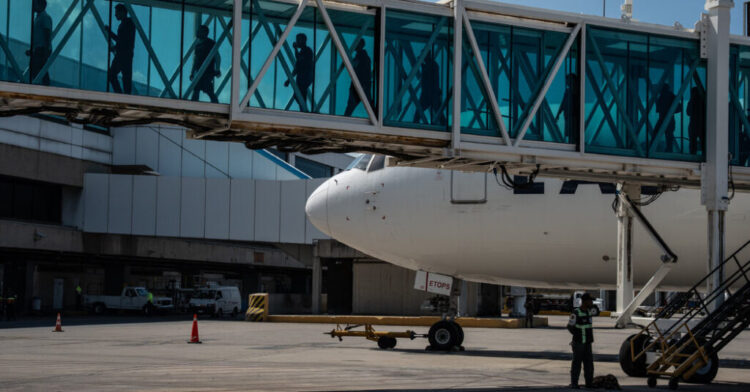
Venezuela’s interim government has agreed to accept an increased number of deportation flights from the United States, a move U.S. officials describe as a sign of cooperation following Washington’s capture of President Nicolás Maduro earlier this month. According to a U.S. official, Venezuela previously allowed up to two flights per week but is now expected to receive three, a change confirmed by two additional officials who spoke on the condition of anonymity. This week marked the first time since President Trump took office that three deportation flights arrived in Caracas in a single week.
If three flights per week become routine, nearly 30,000 Venezuelans could be deported this year, about double last year’s total, according to immigration experts. Such a figure would place Venezuela among the top five countries receiving deportees from the United States, where an estimated 650,000 Venezuelans are living without legal status. Asked about the development, a White House spokeswoman said, “The Trump Administration will continue using all the tools at our disposal to carry out the largest mass deportation operation of criminal illegal aliens in history.” The Venezuelan government did not respond to a request for comment.
The increase represents a political victory for President Trump and advisers such as Stephen Miller, who have pushed aggressively for expanded deportations and supported efforts that led to Mr. Maduro’s removal. The United States severed diplomatic ties with Venezuela in 2019, and deportation flights were largely suspended for years, complicating efforts by successive administrations to manage the surge of Venezuelan migrants fleeing economic collapse. Following Mr. Maduro’s capture, both countries have taken tentative steps toward restoring diplomatic relations and reopening embassies.
Human rights groups and migration experts warn that the expanded flights could result in more deportations without due process. Savi Arvey of Human Rights First said the move heightens fear among migrants because Venezuela remains politically unstable, while Adam Isacson of the Washington Office on Latin America warned that faster removals could lead to more arrests as detention centers grow crowded. “If they can actually get them out of the detention centers and back in Caracas faster — yeah, they’re going to arrest more of them,” he said.
NEWS NOW: