
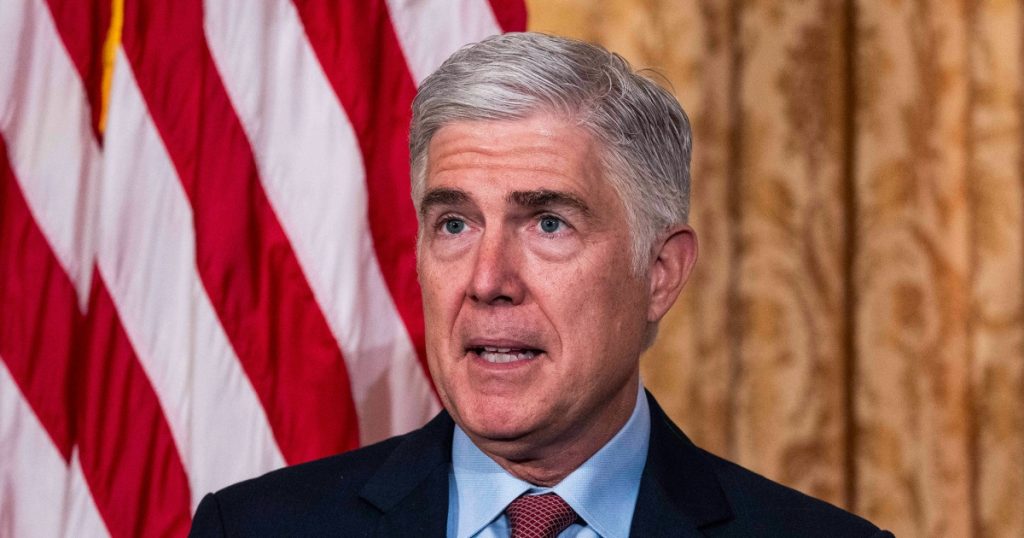
Justice Neil Gorsuch criticized fellow Supreme Court justices over the major questions doctrine in a tariff ruling, deepening ideological tensions over executive power and congressional authority.
Supreme Court Justice Neil Gorsuch sharply criticized his colleagues in a tariff ruling, accusing them of inconsistent use of the controversial “major questions doctrine,” which requires clear congressional authorization for major executive actions. In a 46-page solo opinion, Gorsuch argued that President Trump’s tariff authority under the 1977 International Emergency Economic Powers Act was unsupported, writing, “It is an interesting turn of events… Each camp warrants a visit.” Liberal justices rejected the doctrine as judicial invention, while some conservatives sought exceptions.
Gorsuch also used the opinion to urge Congress to reclaim legislative authority from the executive branch, calling the legislature a “bulwark of liberty.” The ruling triggered political and legal reactions, with Trump criticizing the Court on social media while insisting he has the power to impose tariffs without congressional approval. Justice Elena Kagan dismissed the doctrine as a “so-called” principle, highlighting deep ideological divisions on the Court.
NEWS NOW: