
A US airman stranded in Iran’s mountains for 36 hours was rescued thanks to a CIA-led deception campaign and a daring military operation that thwarted Iranian efforts to locate him.
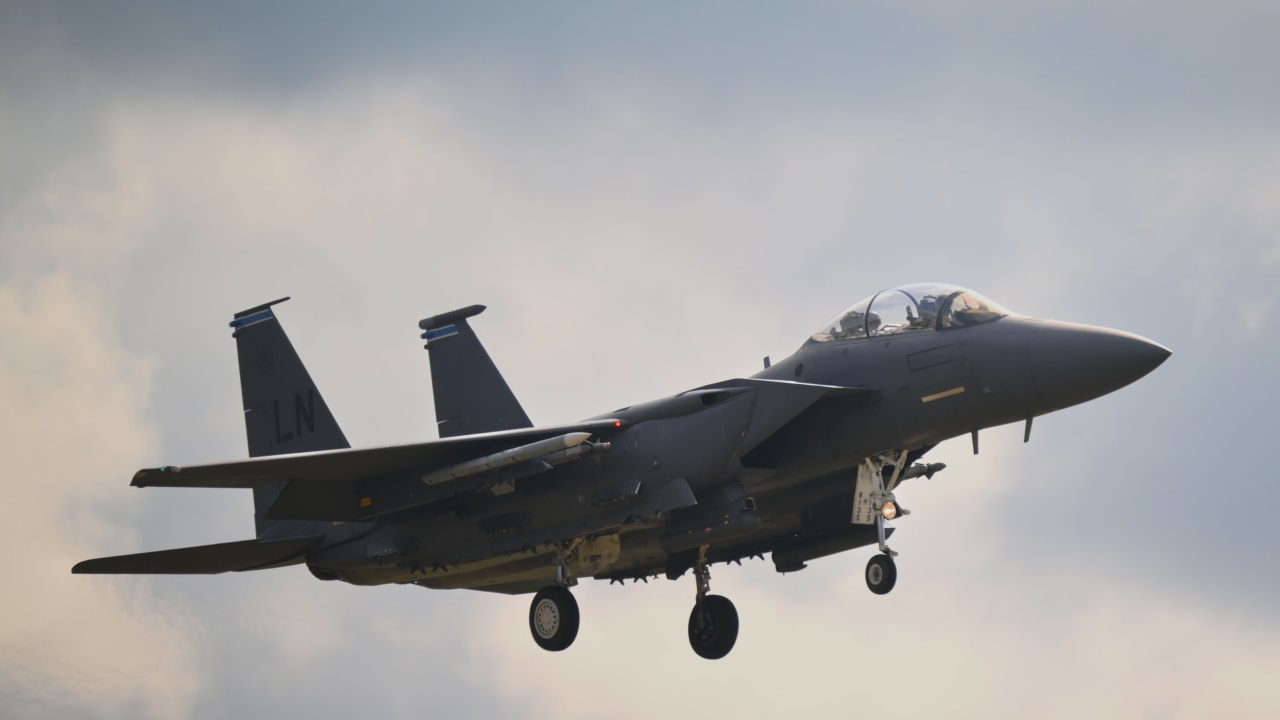
US officials confirmed to FOX News that the US Central Intelligence Agency (CIA) conducted an extensive deception campaign as part of the US mission to rescue a downed US airman, whose F-15 was shot down by Iranian forces in southeastern Iran.
The Airman, who hasn’t yet been publicly named, was one of two aircrew flying the F-15 when it was shot down. A US military team rescued the aircraft’s pilot later that day, but the second airman was stranded for 36 hours in mountainous terrain before being rescued by US forces.
The CIA campaign involved spreading word inside Iran that US forces had already found him and were moving him overland for exfiltration, confusing Iranian forces and leadership in their own search for the missing airman.
While Iranian forces grappled with misinformation, US intelligence was able to aid in locating the airman in Iran and assist in a US special forces extraction mission.
It was the ultimate “needle in a haystack” scenario, a US official told Fox News. “A courageous American hidden within a mountain crevice, undetectable by conventional means but revealed through CIA intelligence,” he said.
The rescue mission
In addition to the CIA’s intelligence campaign, the rescue mission employed hundreds of special forces troops, dozens of US warplanes, and helicopters, according to a New York Times report.
The US special forces teams were deployed on the ground in Iran on both Friday and Saturday as part of the search and rescue effort. While the search operation was conducted, the Islamic Revolutionary Guard Corps (IRGC) dispatched teams in an attempt to locate the missing airman. To thwart these efforts, US Air Force jets carried out strikes against Iranian forces to prevent them from reaching the area, according to sources cited by Axios.
Two officials familiar with the operation told the NYT that as US forces finally located the airman and closed in for extraction, a firefight erupted with Iranian forces.
A senior US military official told the NYT that the mission to rescue the airman was ‘one of the most challenging and complex in the history of US special operations.’
During the operation, US forces reportedly established a temporary air base for their search mission, during which two MC-130J planes became stuck, according to a Wall Street Journal report.
MC-130Js are specially equipped aircraft used for covert infiltration and the extraction of troops from behind enemy lines.
Due to the planes being immobilized, three additional planes were reportedly sent in for final extraction, NYT reported, and US forces made the decision to blow up the downed planes before evacuating the area.
After the successful extraction mission, Iranian forces discovered the remains of the MC-130J planes and falsely claimed that their military had shot them down.
“According to the IRGC Public Relations Department, through divine favor, the hostile American drone that had been tracking a downed fighter pilot in the southern Isfahan was shot down.” IRNA news tweeted regarding the MC-130J aircraft.
🚨 US Completes Daring Rescue of Downed F-15E Crew Member from Iran
– As I reported hours ago and now Fox News confirms the Weapons Systems Officer (WSO) from the downed F-15E Strike Eagle has been successfully rescued and, along with the entire US rescue team, is safely out… https://t.co/qE8M7OcOgA pic.twitter.com/yQcNndXK0D
— Tony Seruga (@TonySeruga) April 5, 2026
US Completes Daring Rescue of Downed F-15E Crew Member from Iran
– As I reported hours ago and now Fox News confirms the Weapons Systems Officer (WSO) from the downed F-15E Strike Eagle has been successfully rescued and, along with the entire US rescue team, is safely out of Iran.
– The F-15E was struck Thursday night (early Friday local time) in southwest Iran; both pilot and WSO ejected.
– The WSO used SERE training to evade Iranian forces: hiked from wreckage, hid on an elevated ridge, and activated the emergency beacon.
– Complex Combat Search and Rescue (CSAR) mission involved US Special Operations forces, including Air Force Pararescuemen (PJs), multiple military branches, and layered support.
– Ground fighting occurred as US teams kept IRGC and Basij hunters at bay; local videos show injured/dead Iranian personnel (no Americans killed).
– A-10 Warthog providing close air cover for the rescue crashed in Kuwait; its pilot ejected safely and was rescued.
– The original F-15E was largely destroyed on impact with sensitive equipment aboard.
– Two US rescue helicopters were hit by enemy fire; crew members were injured, but all successfully exited Iran.
– My Pentagon sources are very high-level, and they describe the multi-layered operation as highly complex, involving many elements to locate and extract the downed airman and full team.
‘You have to be prepared to be the person that’s hit,’ retired US admiral says
A former top US military official has spoken to the BBC about how the Americans might have found the second rescued airman.
William Fallon, a retired US Navy admiral, tells the World Service’s Weekend programme that “in typical circumstances in a two-seater plane, the two are not that far apart when they get on the ground”.
He says this means the US likely had a “pretty good idea” of where the airman might have been, adding “time of day” probably worked in the rescue mission’s favour: “Darkness is better for our people because they’re used to operating at night.”
Fallon says that when flying over hostile territory, “you have to be prepared to be the person that’s hit”.
Success rate on this sort of operation ‘usually very low’ – military expert
Retired US Marine Corps Col Brendan Kearney tells the BBC that the success rate on this sort of operation is “usually very, very low”.
Although the airman would have had capabilities to communicate, it is an “electronic nightmare” because “all it takes is for one person to spot him”, Kearney says.
“You can’t panic under any circumstances,” he adds.
He says some reporting suggests the airman may have had to “move to high ground and stay hidden”, calling it a “testament to his training”.
NEWS NOW: