
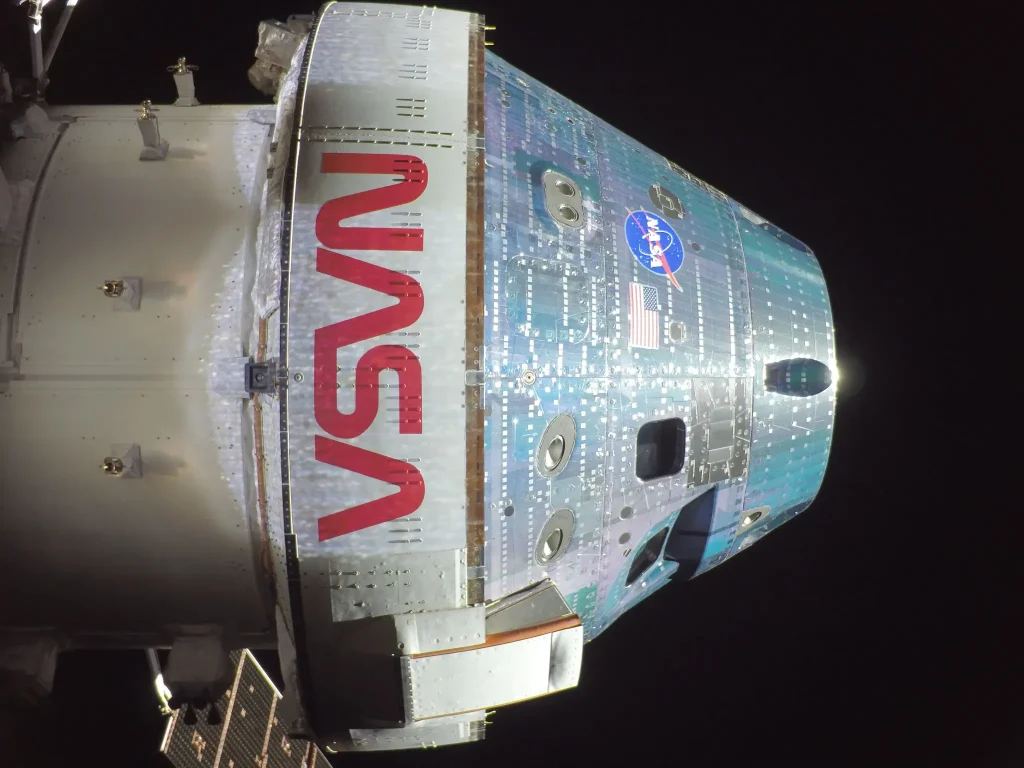
🚨🇺🇸 The Artemis II toilet is back online. After 2 hours of pointing it at the sun.
— Mario Nawfal (@MarioNawfal) April 4, 2026
The fix for a $23 million space toilet was: sunlight.
4 astronauts heading to the Moon just had to wait for their bathroom to thaw. NASA called it a "waste dump." The crew probably called it a… https://t.co/zLo7Qu6NR4 pic.twitter.com/IQExY7FeS1
The Artemis II crew successfully unclogged a frozen urine line by rotating their capsule toward the sun, though the spacecraft’s advanced toilet remains restricted to solid waste only as they continue their historic lunar fly-around.
‘Burning smell’ detected from NASA’s $23 MILLION ARTEMIS II TOILET — NYP
Imagine waking up near the moon and not having a working toilet pic.twitter.com/NMjAZkavmQ
— RT (@RT_com) April 4, 2026
‘Burning smell’ detected from NASA’s $23 MILLION ARTEMIS II TOILET — NYP
Imagine waking up near the moon and not having a working toilet
The Artemis II crew’s journey to the lunar far side has been complicated by recurring issues with the Orion capsule’s $30 million Universal Waste Management System. On Saturday, flight controllers identified a frozen urine clog in the exterior vent line, which prevented the system from expelling liquid waste into space. To resolve the blockage, Mission Control directed the crew NASA’s Reid Wiseman, Victor Glover, Christina Koch, and the CSA’s Jeremy Hansen to rotate the spacecraft to utilize solar heat. While the maneuver successfully thawed the line, the toilet remains only partially operational, with Flight Director Judd Frieling confirming the system is currently “go” but “for fecal use only.”
This latest setback follows a series of hygiene-related hurdles that began shortly after Wednesday’s launch. The crew initially discovered the toilet’s pump was non-functional, a critical failure in a zero-gravity environment where mechanical assistance is required to pull waste away from the body. Astronaut Christina Koch, who successfully repaired the unit by priming the pump with additional water, jokingly embraced her role as the mission’s “space plumber.” During a virtual press conference, Koch emphasized the importance of the hardware, stating, “I like to say that it is probably the most important piece of equipment on board,” and added that the crew felt a collective “sigh of relief” once the initial motor issues appeared resolved.
Despite the successful “space plumbing,” the crew must now use Collapsible Contingency Urinals (CCUs) for liquid waste while the main system is monitored. The astronauts also reported a faint burning odor in the hygiene bay, which NASA engineers attributed to harmless off-gassing from gasket material rather than a mechanical fire. These challenges highlight the complexities of deep-space life-support systems as NASA prepares for sustainable lunar exploration. Reflecting on the necessity of the system, Koch noted, “Luckily, we are all systems go,” though the mission continues to balance high-stakes navigation with the practical realities of managing waste 200,000 miles from Earth.
NEWS NOW:
- “Ghost Murmur”: The science behind CIA’s secret AI tool that can detect a heartbeat from miles away
- Church in Tehran hold memorial for Khamenei 40 days after his killing
- New report details secret White House meeting that sparked Iran war
- Eligible young men to be automatically registered for U.S. military draft