
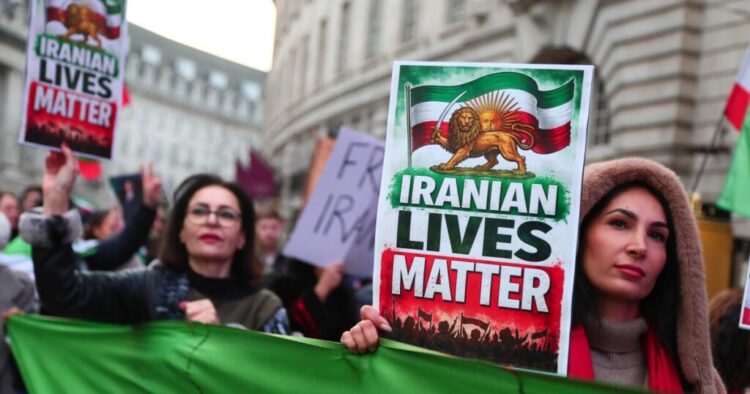
Iran’s ongoing crackdown on nationwide protests has intensified scrutiny of U.S. foreign policy, with critics arguing that Washington faces a defining test of its moral leadership as Iranian authorities continue to use lethal force against demonstrators. Reports cited by activists estimate that between 12,000 and 20,000 people may have been killed since the unrest began, while women face severe penalties, including execution, for defying strict dress codes. Supreme Leader Ali Khamenei has ordered protesters “put in their place,” and Iran’s judiciary has announced that participants will be charged with moharebeh, or “enmity against God,” a crime punishable by death.
The unrest comes as the Iranian government grapples with economic strain, international sanctions, and damage to its nuclear program, conditions analysts say have left the regime unusually vulnerable. Supporters of stronger U.S. engagement argue that the Trump administration has previously expressed solidarity with the Iranian people but now appears hesitant to escalate pressure. They contend that failure to act decisively would signal that American commitments to human rights remain largely rhetorical.
The debate has also exposed divisions within international political movements, with some left-leaning groups and commentators framing the protests through an anti-imperialist lens and declining to support calls for regime change. Critics argue that this selective response mirrors global patterns in which humanitarian crises in countries such as Nigeria and Sudan receive limited attention or aid despite high civilian death tolls.
At the center of the discussion is a broader question about the international order: whether state sovereignty should continue to shield governments accused of mass abuses, or whether external powers have a responsibility to intervene when citizens’ basic rights are violated. As Iran’s protests persist, observers say the U.S. response could shape perceptions of American resolve far beyond Tehran.