
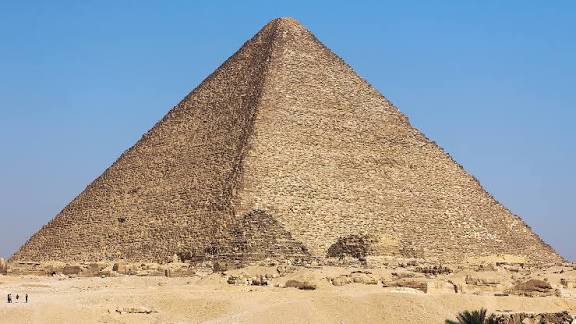
An Italian engineer’s erosion analysis suggests Egypt’s Great Pyramid could be tens of thousands of years older than previously believed, though the unpeer-reviewed findings remain controversial.
Italian engineer Alberto Donini has proposed the Great Pyramid of Giza could be between 20,000 and 40,000 years old, far older than the conventional 4,600-year estimate. Using his Relative Erosion Method, Donini compared erosion on stones exposed since construction with those exposed after casing removal 675 years ago. His study examined twelve points around the pyramid’s base.
“Although the resulting date ranges are wide, the conclusions indicate a low probability for the official archaeological dating of 2,560 BC,” Donini said. Measurements at different points produced ages ranging from 5,700 to over 54,000 years, with an average suggesting 68 percent probability of construction between 11,000 and 39,000 years ago. The findings remain unverified as the study has not undergone peer review.
The research challenges traditional archaeological dating methods and raises questions about human architectural capabilities in prehistoric times. If accurate, the pyramid would predate known advanced civilizations and suggest Pharaoh Khufu renovated rather than built the structure. Critics note factors including climate variation, acid rain, and foot traffic introduce significant uncertainty into the calculations.