
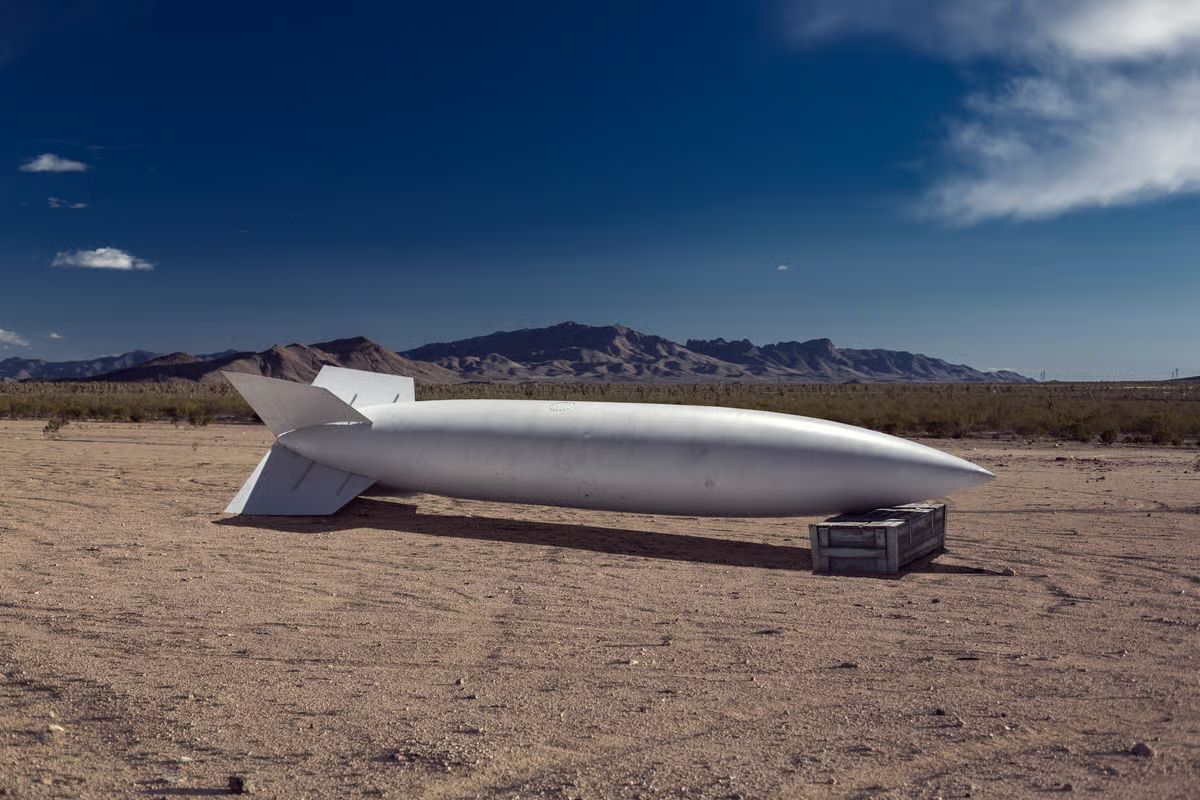
Iran has introduced the “Nasrallah” missile in a retaliatory strike against major Israeli oil refineries, aiming to disrupt Israel’s energy production despite ongoing U.S.-Israeli aerial suppression.
The Iranian Revolutionary Guard Corps (IRGC) announced on Thursday, March 19, 2026, the deployment of a new “Nasrallah” precision-guided missile, a modernized variant of the Qader series, used in a coordinated strike against Israel’s BAZAN refineries in Haifa and oil facilities in Ashdod. Describing the operation as “revenge” for Israeli strikes on the South Pars gas field, Iranian state media claimed the missiles which feature enhanced guidance and larger payloads successfully hit several energy targets, though Israeli officials reported that damage was primarily caused by falling debris following “successful interceptions.”
The symbolic naming of the weapon after the late Hezbollah leader signals a “symbolic and operational deepening” of Tehran’s commitment to the regional war, as the regime attempts to prove its military production remains robust despite the intense American and Israeli air campaign known as Operation Midnight Hammer. While the strike triggered fires and localized power outages in Haifa, Energy Minister Eli Cohen stated the damage to the national infrastructure was “not significant,” even as military analysts continue to evaluate whether the “Nasrallah” represents a legitimate technological leap or a rebranding of existing hardware for psychological warfare.