
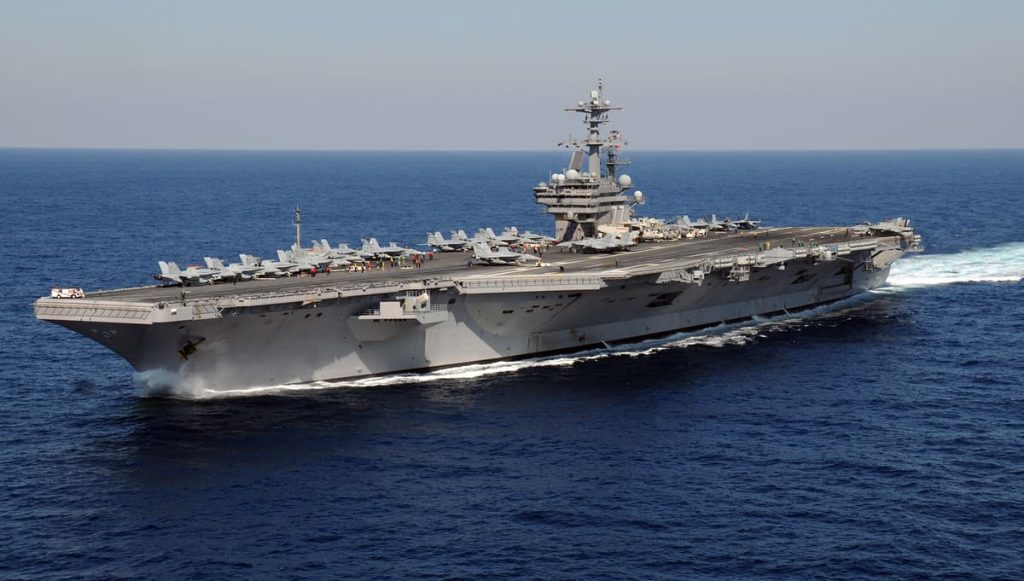
The USS George H.W. Bush is taking a lengthy detour around the southern tip of Africa to reach the Iranian blockade while avoiding Houthi-controlled waters in the Red Sea.
The USS George H.W. Bush (CVN-77) Carrier Strike Group is currently sailing off the coast of Namibia, opting for a massive detour around the African continent to reach the Arabian Sea. In a strategic shift reported by USNI News, the carrier and its escorts—including the destroyers USS Donald Cook, USS Mason, and USS Ross deliberately bypassed the traditional route through the Mediterranean and the Suez Canal. This decision was made to avoid the Bab el-Mandeb Strait, where Iran-backed Houthi militants continue to threaten U.S. and commercial vessels with drone and missile strikes.
The strike group, which deployed from Naval Station Norfolk in late March, is destined for the Strait of Hormuz to reinforce the escalating U.S. naval blockade against Iranian oil exports. By taking the “long way” around the Cape of Good Hope, the Navy is prioritizing the safety of the carrier and its air wing over the speed of arrival. While the route adds thousands of extra miles and several days to the journey, it ensures the fleet remains out of range of Houthi-controlled territory during this period of heightened regional tension.
This deployment marks a significant surge in U.S. naval presence near Iran as Washington attempts to tighten economic pressure on Tehran. The inclusion of the fast combat support oiler USNS Arctic ensures the strike group remains self-sufficient during the lengthy transit through the South Atlantic and Indian Oceans. As the blockade begins to take hold, the arrival of the Bush will provide critical aerial and maritime support to ongoing operations aimed at choking off Iran’s primary source of government revenue.
NEWS NOW: