
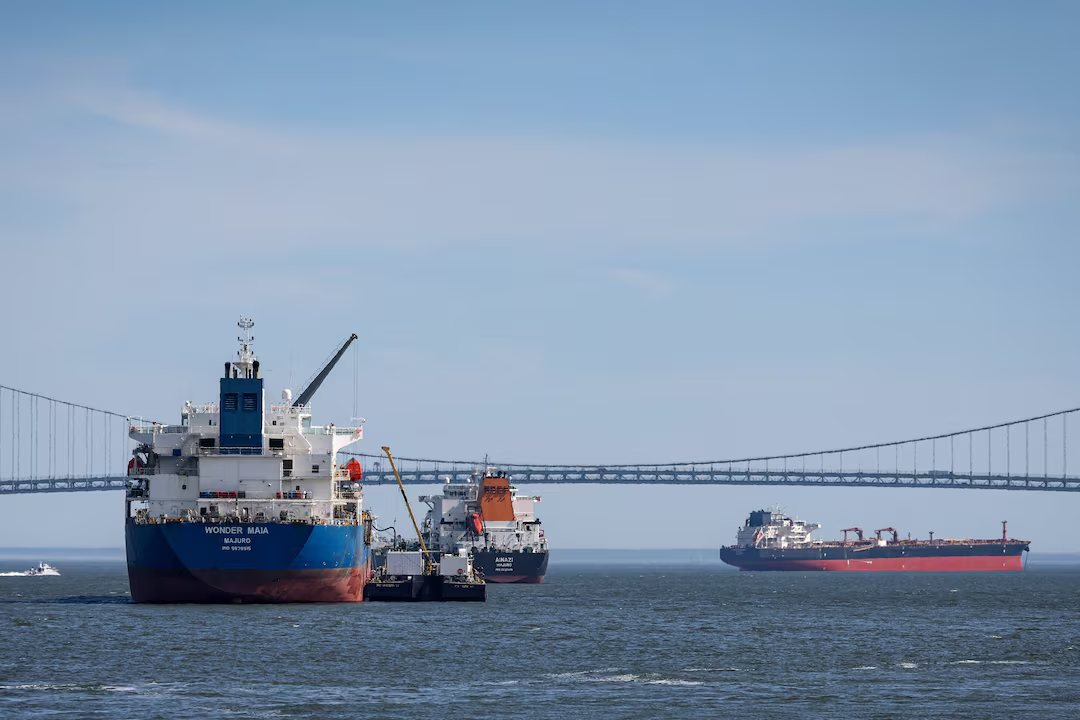
The U.S. is on the verge of becoming a net crude exporter for the first time since World War II as global buyers scramble for American oil to replace Middle East supplies cut off by the Iran war.
The United States nearly became a net crude oil exporter last week for the first time in over 80 years, as the ongoing conflict between Iran, Israel, and the U.S. severely disrupts global energy markets. With the Strait of Hormuz effectively blocked—halting nearly 20% of the world’s oil and gas supply—refiners in Asia and Europe are turning to American light sweet crude as their primary alternative. Net imports plummeted to a record low of just 66,000 barrels per day (bpd), while exports soared to a seven-month high of 5.2 million bpd.
This shift marks a historic reversal for the U.S., which has not been an annual net exporter of crude since 1943. The surge in demand is driven by a massive price gap between global benchmark Brent and domestic West Texas Intermediate (WTI), which recently saw a premium as high as $20.69 per barrel. Major economies including Japan, South Korea, Germany, and France have drastically increased their intake of American oil, with approximately 47% of last week’s shipments destined for Europe and 37% for Asia.
Despite the boom, energy analysts warn that the U.S. is rapidly approaching its physical export ceiling. Infrastructure bottlenecks, including limited pipeline capacity and a shortage of available supertankers, are expected to cap exports at roughly 6 million bpd. With 80 empty supertankers currently en route to the Gulf of Mexico, the market is testing the limits of American logistics. Traders note that while the export surge strengthens the U.S. position as a global “supplier of last resort,” it also risks driving up domestic energy prices and exacerbating inflationary pressures.
NEWS NOW: