
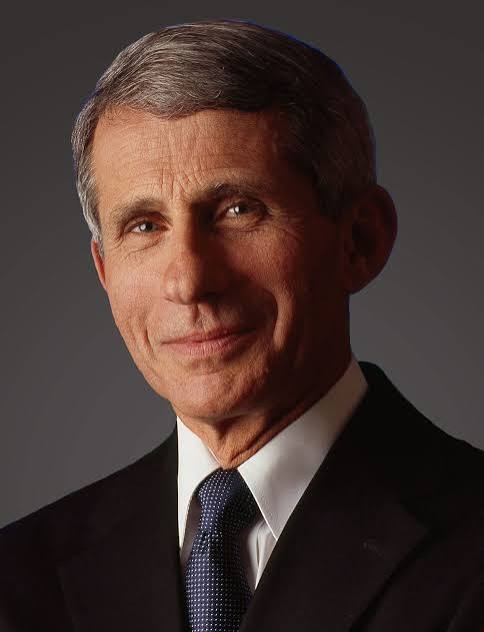
When Anthony Fauci arrives on Capitol Hill tomorrow to testify before Congress, he will be trailed by a security detail he’s paying for himself. Fauci has been testifying before the nation’s elected officials for roughly four decades now, since his days at the forefront of early AIDS research. In years past, he would have prepped by consulting colleagues and poring over data—he would have been there, as he might say, to speak for science. Now he’s under a subpoena from the Senate Homeland Security and Governmental Affairs Committee, and has been conferring with his lawyers on how best to navigate a grilling about his own actions—and what seems to be an effort to catch him in a lie, one that isn’t covered by the blanket presidential pardon he received from Joe Biden. Once famed for being America’s consummate nonpartisan scientist, Fauci is now a far more polarizing kind of public figure: beloved and reviled for what he’s said to represent; targeted by threats to end his life. The more he talks, the more he stands to lose.
This is not the professional coda that Fauci’s half century in government once seemed to be heading toward. For decades, he has been one of the nation’s best-known and most-respected scientists. In the late 1960s, Fauci helped lead a team at the National Institutes of Health that repurposed cancer therapies as cures for several once-fatal rheumatological conditions. His later partnerships with AIDS activists and his push to accelerate experimental-drug trials for HIV helped transform the infection into a survivable condition. He went on to serve as a chief architect of PEPFAR, a global HIV-prevention-and-care program that has prevented an estimated 25 million deaths since 2003. And over the course of his nearly 40 years as the head of the National Institute of Allergy and Infectious Diseases, he turned one of the NIH’s quietest branches into a $6 billion research juggernaut. Fauci has “saved more lives, created more amazing infrastructures for developing research opportunities, cured more people, provided health care to more people both in the United States and abroad, probably, than any single scientist in his lifetime,” Larry Corey, an infectious-disease expert at the Fred Hutchinson Cancer Center, told me.
READ MORE AT THE ATLANTIC NEWS
NEWS NOW: