
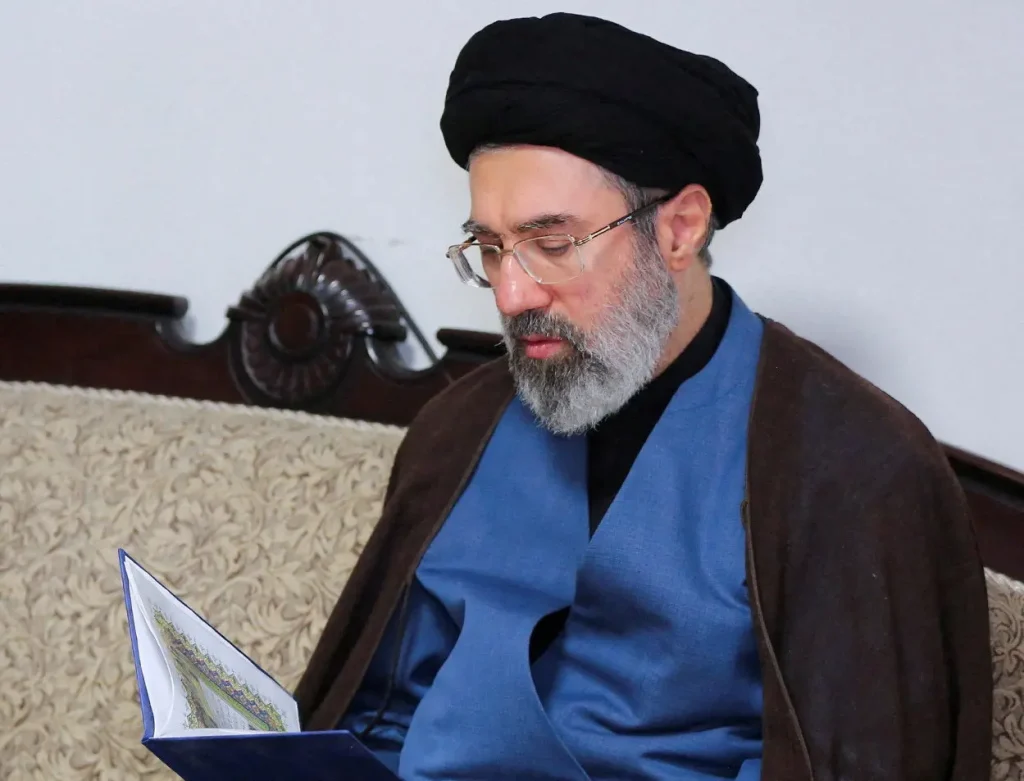
Mojtaba Khamenei has been installed as Iran’s Supreme Leader by the IRGC despite his father’s testamentary opposition and a lack of clerical support, drawing immediate threats of assassination from President Trump and Israeli forces.
The appointment of Mojtaba Khamenei as Iran’s Supreme Leader has sparked immediate domestic and international controversy, as reports surface that the 56-year-old was installed by the Islamic Revolutionary Guard Corps (IRGC) against the explicit wishes of his late father. According to Khosro Isfahani, a research director for the National Union for Democracy with ties to Iranian intelligence, the late Ali Khamenei who was killed in a February 28 airstrike specifically requested in his will that his son not succeed him. Isfahani characterized the new leader as an “impotent young cleric who has achieved nothing in terms of political life,” asserting that “all these years, he has been nothing without his father’s name.”
Sources indicate that Mojtaba’s ascension bypassed traditional legal protocols, with the IRGC reportedly coercing the Assembly of Experts into a forced appointment. Despite significant pushback and a lack of a true majority vote, the clerical body was pressured into the selection, leading many members to boycott the official announcement. “The Assembly of Experts that was supposed to pick the replacement of Khamenei didn’t vote for Mojtaba,” Isfahani stated, adding that the IRGC views him as a “puppet — a blank canvas that they can paint anything on” to ensure the continuation of their military and political dominance during the current conflict.
The appointment has further inflamed tensions with the United States, as President Trump has already labeled the choice “unacceptable.” Speaking from Florida, the President dismissed the new leader as a “lightweight” and warned that “he’s not going to last long” without U.S. approval. The administration has reportedly signaled that it is prepared to take military action against the new leadership unless Tehran meets aggressive demands, including the total abandonment of its nuclear program. Trump emphasized his dissatisfaction with the transition, telling reporters, “we want someone that will bring harmony and peace to Iran,” while suggesting that the current regime is “wasting their time.”
As Iran grapples with the fallout of the U.S.-Israeli military assault that killed nearly 50 high-ranking officials, Mojtaba Khamenei enters power in a weakened state. Having lost his wife, son, and mother in the same strike that killed his father, he is also reportedly recovering from injuries sustained in the blast. With the Israeli military previously declaring that any leader furthering the regime’s current agenda would be an “unequivocal target for elimination,” the new Supreme Leader faces a precarious tenure defined by internal clerical dissent and the looming threat of further decapitation strikes.
NEWS NOW: