
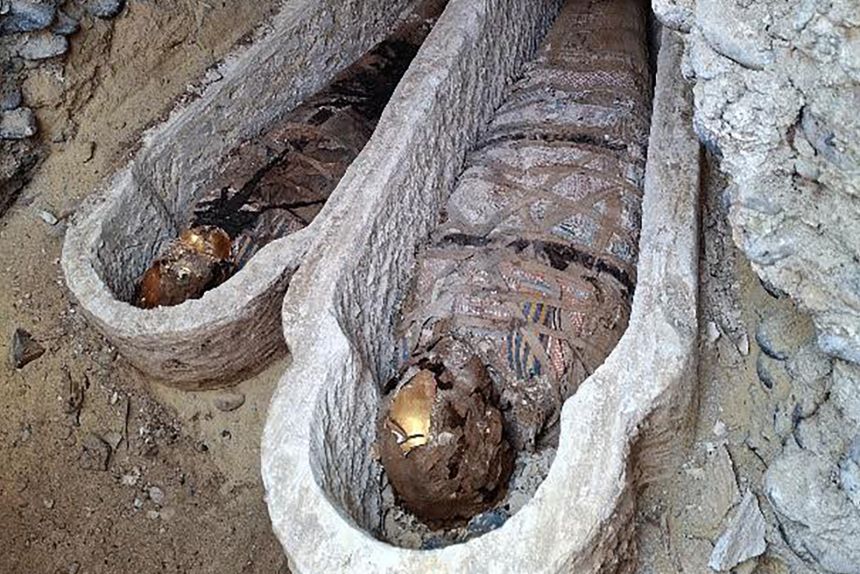
Archaeologists in Egypt have uncovered a 1,600-year-old mummy bearing a fragment of Homer’s Iliad, marking the first known use of a literary text in ancient embalming rituals.
Archaeologists in Egypt have discovered a 1,600-year-old mummy in the ancient city of Oxyrhynchus with a fragment of Homer’s Iliad placed on its abdomen. Experts say it is the first known case of a literary text being used in mummification rituals, unlike previously found papyri containing only ritual formulas.
Ignasi-Xavier Adiego of the University of Barcelona said, “This is the big development for us,” noting that researchers had not known literary texts were used in funerary practices. He added, “Until now, we didn’t know that they would have used literary texts as part of this funerary ritual,” while saying the purpose of the papyrus remains unclear.
The discovery was made in Al Bahnasa, about 200 kilometres south of Cairo, where multiple limestone tombs and mummies were also found. The research team said further analysis is ongoing, though the fragmentary papyrus condition has limited full interpretation of the text and its role in embalming practices.
NEWS NOW: