
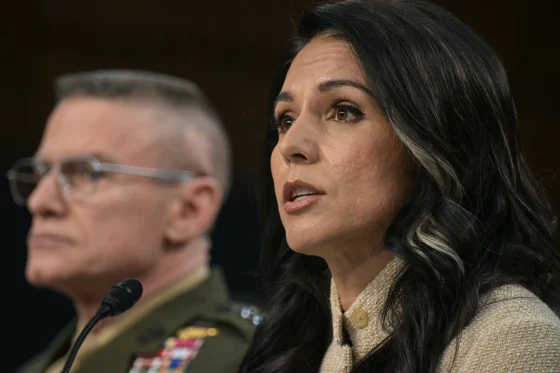
Director of National Intelligence Tulsi Gabbard avoided confirming the White House’s rationale for the war in Iran during congressional testimony, highlighting internal administration divisions following the high-profile resignation of her top deputy.
Director of National Intelligence Tulsi Gabbard declined to label Iran’s nuclear program an “imminent threat” during a Senate Intelligence Committee hearing on Wednesday, creating a notable contrast with White House rhetoric as the U.S.-Israeli air campaign enters its third week. Appearing just a day after her top deputy, Joe Kent, resigned in protest claiming the Tehran regime posed no such threat, Gabbard omitted prepared written remarks stating Iran’s nuclear enrichment capability was “obliterated” and that there have been “no efforts since then to try to rebuild.”
While CIA Director John Ratcliffe testified that Iran “posed an immediate threat at this time,” Gabbard remained neutral under intense questioning from Democrats, suggesting that only the commander in chief could define an urgent threat a stance Senator Jon Ossoff characterized as “evading a question because a candid statement would contradict the White House.” Despite the political friction, Gabbard confirmed that intelligence had warned of Iran’s likely retaliation against energy sites and the Strait of Hormuz, noting that while the regime remains intact, its “conventional military power projection capabilities have largely been destroyed.”
NEWS NOW: