
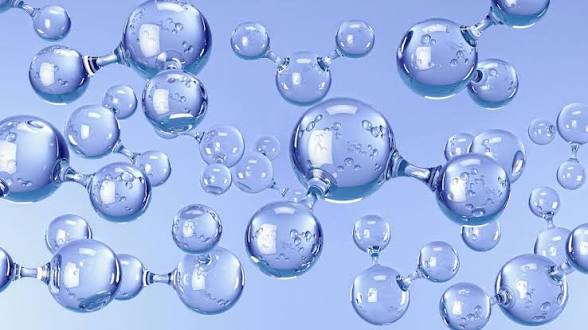
Researchers say artificial intelligence has revived a decades-old theory that water exists as two distinct, constantly shifting liquid structures at the molecular level.
Water might be far stranger than it looks. According to a report by Live Science, researchers have found molecular-level evidence that liquid water may actually exist as a mix of two distinct states — one denser, one less dense — that constantly transform into each other.
The breakthrough, published in Nature Physics, comes from a team led by physical chemist Xiao Cheng Zeng of the City University of Hong Kong, who used artificial intelligence to study water molecules’ behaviour. The work revives a decades-old hypothesis that water holds two local structures capable of switching back and forth.
To dig into the phenomenon, the team ran unsupervised deep learning models alongside massive molecular simulations involving hundreds of thousands of water molecules, processing tens of millions of data points to map how molecules shift between the two structures.
The results showed water generally switches through a simple pathway with a single energy barrier — though near the critical boundary between high- and low-density states, the transition gets more complex, involving multiple energy barriers.
The findings could explain quirks like why water hits peak density around 4°C before expanding as it freezes, letting ice float.
Live Science reports scientists are now working to confirm the results experimentally and explore what they could mean for biological, pharmaceutical and environmental processes that depend on water.
NEWS NOW: